I have had several conversations with parents and other people involved in education regarding grades. I think we have talked this topic to death over Twitter and other mediums. To me it comes down to a simple question. Is it about the grade or the learning? To most unfortunately it's about the grade, and I guess it's hard to argue when colleges and universities base entrance predominantly on the GPA. Although this might be slowly changing - recently 48 New England area colleges are now accepting standards based grade reports. These reports do not report a grade, instead they report the progress of a student in regards to a specific skill or standard.
Shouldn't success be determined by the learning and not the grade? It is too bad that the grade tends to trump the learning that occurs. I have seen this first hand where students will intentionally dodge more difficult courses so that they don't risk their perfect GPA. Is this what we really want? Kids that choose not to take risks because of the impact to their grades? I think standards based grading switches the focus from the grade to the learning. If grades aren't attached kids are more willing to take risks. To me as a parent I want to know how my child is doing on specific skills rather than grade that tells me very little.
Thoughts??
Wednesday, July 23, 2014

Friday, July 11, 2014
The Shame of the Nation
I have been reading The Shame of the Nation written by Jonathan Kozol for a grad class I am currently taking. It has been an interesting read. The gist of the book centers around inequities in schooling for kids that attend large urban inner-city schools. As a rural school administrator at times it has been difficult to relate to the trials and tribulations that inner-city students, parents, teachers. and administrators face. Kozol's outrage is felt throughout the book. I found the following themes very intriguing.
Kozol discusses the use of standards and standardized testing in education. In the schools that he visited he found the use of standards suffocating. Teachers were not allowed to deviate and he compared students to robots. In many of these inner-city schools everything centered around a rubric, set of standards, or directions. Kozol found very little freedom for students and teachers to think independently. One of the quotes from a principal referring to standards education was eye opening. She said, "If the road does not lead to Rome, we don't want it followed" (p. 110-111). I am a proponent of standards based education, but not to the extent written in the book. All students need to master what teachers deem as essential standards, but this choice should be up to the teacher. Rote memorization and the test prep associated with this book to the air out of the balloon in the schools Kozol visited. He also makes the argument that this sort of regimented factory style education would never fly in a middle class school. We have to remember that teaching is both an art and a science. There was sentiment throughout the book where policy makers, and educators felt that without this relentless structure "these" kids could not learn. This was alarming to me.
One could compare the inequities in North Dakota in a similar way. We don't have inner-city issues of course, but there is a definite disparity between the "haves" and the "have nots." Our disparity occurs between what we would call urban communities and rural communities. All one has to do is to take a drive from an urban hub and head out to a rural school. Most rural buildings pale in comparison to those of our regional hub cities. The course offerings at a rural school are typically bare bones when compared to our larger cities. In Kozol's experience less experienced teachers typically get their start in the inner-city schools. This is no different in rural areas in North Dakota where young and inexperienced teachers make up the workforce. A person could make the argument that rural schools are expensive and inefficient and should receive less to operate. Equity will always be an issue from inner-city to suburban to rural. If you want to see further disparities take a drive to a reservation school where all of these issues are further compounded.
We have an oil boom that has been occurring in Western North Dakota. Many schools are dealing with unprecedented growth. Communities and schools are doubling in size in short periods of time. I have heard many discussions from other administrators that are concerned with the clientele we are receiving. North Dakota is an excellent place to live and the way of life is certainly changing for many that have lived here their entire life. We should be welcoming growth and the increased diversity that comes with it. As Kozol writes, we have to be careful about putting labels on kids. These "new" kids will impact our schools in both positive and negative ways and we need to be okay with that. Diversity is a good thing for our communities and our schools!
Finally, in many of the inner-city schools that Kozol visited he found a common theme of "school to work" programs. In many instances students had to choose a career by the 9th grade. How is this possible? I am a believer in exposing kids to a wide variety of careers before they have to make that decision. As a superintendent I hear often from business in the media about how we are not preparing kids for work and how schooling is about preparing kids for their career. I understand that work preparation is a large part of getting an education, but is that all education is for? I think school would become pretty mundane if all we did was teach kids how to cooperate in a work environment. Education should be about exposure to a wide variety of things. Kids should be prepared to think independently and critically. How much of the work preparation should be the job of the employer?
Find some time to read The Shame of the Nation.
Thursday, May 29, 2014
The Curious Garden and Leadership
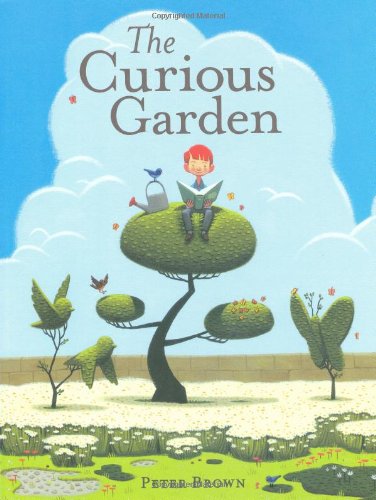
Image Source: http://ecx.images-amazon.com/images/I/51ukOjusKKL.jpg
The Curious Garden
and Leadership
This
book is one of my children’s favorite books.
It is a story about a little boy named Liam. He lives in a polluted
world and discovers a small garden on an abandoned railway. He is a very curious child. He begins to water and nurture the garden
back to health. Little did he know the
impact he would have on the polluted community and how the garden would change
the community forever. Liam displays
many effective leadership skills throughout his story.
Toxic culture:
“There once was a city without gardens or trees or greenery of any kind. Most people spent their time indoors. As you can imagine, it was a dreary place” (p.2).
Liam’s community
is toxic and is similar to most toxic organizations. They lack collaboration and the people within
the community are very isolated. Isolation
within a school organization is toxic and creates a dreary, stale place. Innovation and growth cannot occur without
teams of dedicated individuals working together. It is important for the leader to encourage
and create structures that allow collaboration to occur. Collaborative environments and support from
the leader help combat toxic cultures.
Visibility:
“There was one boy who loved being outside. Even on drizzly days, while everyone else stayed inside, you could always find Liam happily splashing through his neighborhood” (p. 3).
Liam put
himself outside when it wasn’t the popular thing to do. He was the only one willing to venture
outside and did so happily. Leadership
can be lonely, and leaders have to be willing to walk the talk. If we are implementing change it is
imperative that the leader is visible, because change is messy. The leader must be “there” to help ease
tensions and help members of the organization navigate the path. I believe effective leaders have a sense of
humor and are positive people. They are positive
even on drizzly days, and their positivity is infectious.
Curiosity:
“It was one such morning when Liam made several surprising discoveries. He was wandering around the old railway, as he did from time to time, when he stumbled upon a dark stairwell leading up to the tracks” (p. 3).
Liam is
curious and willing to take risks. Curiosity
is an important trait of successful leaders.
They want to explore how their organization can be more effective. This is done through needs assessments,
interviews with staff members, and exploring data. Effective leaders take risks and create a
culture that not only allows risk taking, but encourages it. A successful organization that encourages risk
taking must also make it safe to fail.
Failure is important for the growth of individuals within an
organization.
Leaders are made:
“Liam may not have been a gardener, but he knew that he could help. So he returned to the railway the very next day and got to work. The flowers nearly drowned and he had a few pruning problems, but the plants patiently waited while Liam found better ways of gardening” (p. 6).
I believe
that leaders are made. Effective leaders
are constantly refining and reflecting as they gain experience. Liam wasn’t sure how to raise a garden in the
story so he tried different things. Over
time he got it right and the garden began to grow and expand under his guidance
and support. This is similar to my
growth as a school administrator. As you
gain experience you gain confidence in your decision making and your skills as
a leader.
“As the weeks rolled by, Liam began to feel like a real gardener, and the plants began to feel like a real garden” (p. 7).
Our
experience gives us confidence in our leadership abilities.
Leadership development within
your organization:
“The tough little weeds and mosses were the first to move. They popped up farther and farther down the tracks and were closely followed by the more delicate plants” (p. 8).
Developing
leaders within your organization are important to creating progress that leads
to major breakthroughs. For example, in
a school organization it’s imperative that leaders develop and distribute
leadership to teachers to increase momentum.
As the story goes, you need “tough little weeds and mosses” (Teacher
leaders) to move first. Teacher leaders
make the path easier for the “delicate plants” (People on the fence) to join
them.
Preparation:
“Rather than waste his winter worrying about the garden, Liam spent it preparing for spring” (p. 16).
Liam was
not satisfied and continued to better himself by learning about proper
gardening techniques and reflecting on the previous spring, summer, and
fall. Effective leadership is about
proper preparation and having a growth mindset.
An effective leader is continuously improving. The leader should be the
lead learner, they should be at the forefront of best practice. Preparation and
creating a path that all can understand is key for a successful organization.
Leadership by example:
“But the most surprising things that popped up were the new gardeners” (p. 24).
Liam
gained momentum and other people began to come out – to help the curious garden
expand. Because of Liam’s leadership he inspired
others to take part. Leadership is about
leading by example. Effective leaders
create cultures where people work together, and they take pride in their work. They feel comfortable and trust the leader to
take risks. Liam provided the guidance
and set the example needed to change the community. Members of the community in the story bought
into the changes established by Liam, because they trusted him.
Tuesday, May 27, 2014
My speech to the class of 2014
I want to talk today about the significance of grit. Grit is the quality that enables individuals
to work hard and stick to their long term passions and goals.
I encourage you to reflect on your passions and what you want to
accomplish in life from this day forward.
It is extremely important that you are passionate in whatever line of
work you enter. That is what will drive
you towards personal and professional success.
I am very interested in understanding how some students make it in life
when they have everything stacked up against them. What is that allows students with every at
risk factor to succeed?
Angela Lee Duckworth is a researcher and has been conducting ground
breaking studies on grit. Grit is
optimism. To be gritty is to be resilient in the face of failure or
adversity. So when times get tough,
which they will, or they have already – How do you respond? When you are gritty
you respond with optimism - the belief that if I work hard I can get through this
tough patch.
According to Duckworth grit is also about having consistent interests –
and focused passions over time.
Duckworth studied the relationship
between grit and high achievement at West Point Military Academy. She
compared the Whole Candidate Score which included the SAT, class rank,
leadership ability and physical aptitude in their short questionnaire on grit.
They found that the Whole Candidate Score which was the Army's predictor
of success had no relation on whether a candidate would complete the program.
You see it wasn't about test scores, it was about how resilient the
person was.
Grit predicts success over and beyond talent.
It isn't talent that causes success,
although it does help. It is resiliency that is the greatest predictor of
success for kids. How many of us know people that were the most talented
people in the world, but falter in life?
What about talent? Can talent
alone bring success without grit? According to Duckworth grit and talent either
aren’t related at all or are actually inversely related. In terms of academics – if you’re just trying
to get an A or trying to get to some threshold and you’re really talented you
may only do homework for a few minutes.
You get to a certain level of proficiency – then you stop – so you
actually work less hard.
Think about this if you are a talented individual. If you are really good at something do you
stop when you have reached a certain level? Push yourself! It is the people
that are talented and gritty at the same time that push the boundaries of
success.
People who can set long-term goals and stick to them have a leg up on
success in school and life.
The sky is the limit for all of you sitting out there. I can promise you that success doesn’t come
easy and there will be plenty of ups and downs on your journey in life. Don’t be afraid to fail – embrace it and
learn from it!
As parents and educators we need to
instill the attitude of "I can get better if I try harder" in our
kids. Encourage them to be resilient and help them to understand that
failure is not the end of the world. Failure is an option, and helps us to
become resilient.
To wrapup I will finish with the famous words of Dr. Seuss, “You have brains in your head. You have feet in your
shoes. You can steer yourself any direction you choose. You're on your own. And
you know what you know. And YOU are the one who'll decide where to go...”
“You're off to Great Places! Today is your day! Your mountain is waiting, So...
get on your way!”
Subscribe to:
Posts (Atom)