Monday, March 9, 2020

Thursday, November 21, 2019
You should read: No More Telling As Teaching
Direct instruction or lecturing have always played a significant role in classrooms, but is it really the best way to engage students in the content? No More Telling As Teaching does not demonize lecturing like the title may imply. It simply recognizes that lecturing may not be the most effective instructional technique. We are often drawn to lecturing, because it might be the quickest way to cover the myriad of standards that exist in each content area. By the way, I don't like to use the word "cover" when referring to teaching the content. I'm in favor of the less is more philosophy to develop deep understandings for learners.
We need to consider who is doing the work in the classroom. I would argue that if the teacher is doing most of the work in a classroom, I would bet most of the learners are likely compliant or unengaged. Tovani and Moje ask us to consider these three things when we think about engagement: a learner must know how to behave in a way that is productive to learning, a learner should be connected to the topic emotionally, and a leaner should be intellectually stimulated. The "pedagogy of telling" may not be the best method to achieve behavioral, emotional, and cognitive engagement.
According to Tovani and Moje (2017) the best way to learn is through a mix of classroom experiences.
According to Tovani and Moje (2017) the best way to learn is through a mix of classroom experiences.
"They should include projects driven by questions or problems, whole and small group discussions, participation in real-world activities that make use of targeted learning skills, the reading and writing of multiple texts, interactions with challenging problems, and yes, just-in-time lectures (the best are usually interactive)" (p.21).
To me the most important statement in the above mentioned quote is the focus on applying concepts from the content in a real-world environment. I have seen deep levels of engagement when teachers embed opportunities for learners to engage in the world outside of our school. Learners are more engaged in the activity when they know their work will be viewed by those on the outside. Too many times students don't find value in their work, because it is often done in a silo and we fail to make connections to our community and the real-world.
Tovani and Moje provide some questions to ask ourselves when we plan for our learners.
Tovani and Moje provide some questions to ask ourselves when we plan for our learners.
- How can I connect my content to the world outside of school?
- Why should my students care about this? What real problem will they be attempting to solve?
- What will they create? Is it something that exists in the real world? Which disciplines will they be relying on to solve this problem?
- Who will hear or see their work besides me?
Content needs context.
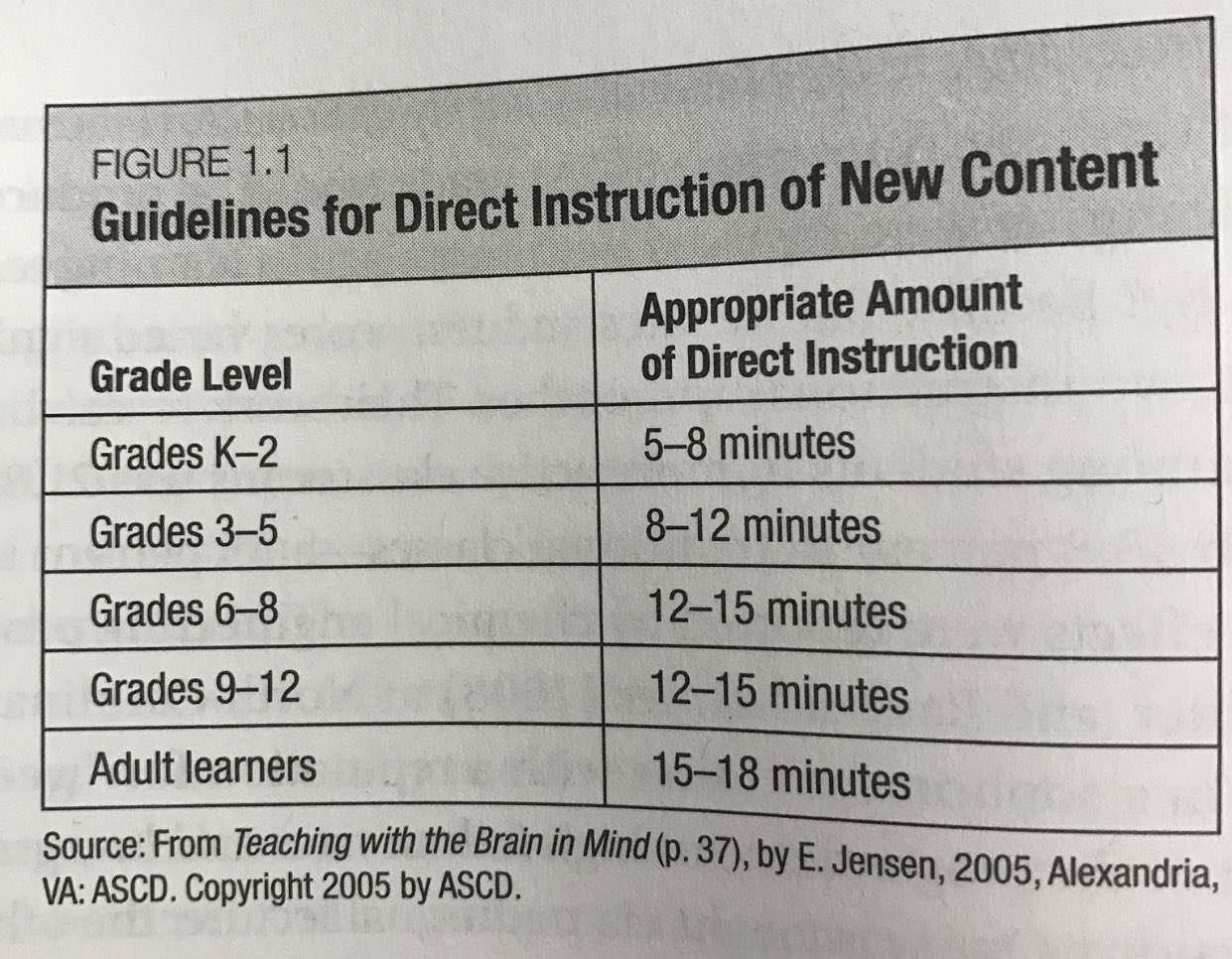
I ran across this on Twitter recently. I think these are some good guidelines for all of us from young children all the way to adult learners.
Thursday, August 29, 2019
Rugby Public School District Learns


I recently shared a blog about changes to our professional learning practices at Rugby Public School District, we had our first professional learning day on August 28th. Teachers, support staff, and administrators spent the morning learning from Donalyn Miller and Valinda Kimmel. Miller has written several books on establishing a reading culture in schools. Kimmel is a literacy consultant that has been helping our school district with early literacy practices. The theme throughout the morning was developing a reading culture from preschool to grade 12.
Staff learned about the power of read alouds, book talks, and different ways to study vocabulary. We often think that reading a book aloud is only good for young children, but the research shows that this is a powerful practice regardless of age. The peak for read alouds often occurs around third or fourth grade. Book talks align with our focus on building classroom libraries and allowing more choice for students over what they read. A Book Talk is a method used to share a book with another person without giving away the whole story. Finally, teachers were able to gain some easy to implement vocabulary activities that can be used across grade levels and subject areas.
We will have three different book studies this year. Our first book discussion was on the book Fundamental Five. Teachers were mixed into different groups and they discussed the five instructional strategies found within the book. One of our teachers commented, “we enjoyed this book and thought it was a nice reminder of what we can be doing to make our lessons better. I also think that because this was a small group session and that we were mixed between schools, it was an awesome way to build community and trust with other colleagues. This was a good experience.”
In the afternoon, we held a debrief session with a focus on next steps to implement these strategies learned in the morning. Teachers then spent the remainder of the day in teams focusing on the following questions: What do we want students to know and be able to do? How do we know they know? What are we doing collectively to intervene when students don’t know? What are we doing collectively to enrich students that already know?
Our district appreciates the ability to provide our teachers additional time for learning and the time to implement our school initiatives. Yesterday was a great day of learning and collaboration! When we know better, we do better.
Monday, July 29, 2019
RPSD to Increase Time for Teacher Training
At
the February 12th school board meeting, the Rugby Public School
Board voted to increase the amount of time for teacher training by adding seven
additional days of training to the 2019-2020 school calendar. The school board
took advantage of a recent law change that provides schools with additional
flexibility for teacher training and storm day makeup.
The
approved school calendar for 2019-2020 provides 10 days of professional
development for teachers and support staff. This equates to one professional
development day per month. The school district will not have students in
session on these training days. In the past, we would front load most of our
training during our two days of professional development prior to school
starting. Due to the time constraints of the school day and a traditional
school calendar it has been extremely difficult to gain momentum on our key
school initiatives. According to research on adult learning, high quality
professional learning is job embedded and continuously occurs throughout the
year.
In
general, the calendar change will provide teachers more opportunities to engage
in school improvement, curriculum planning, and personal professional
development during their working hours. It is the belief that quality is
greater than quantity in relation to time in front of kids. All professionals
need time and opportunities to update, to train, to interact with other
professionals, to hone their craft, to reflect on their work, to get better.
Effective professional development is distributed over time and not jammed into
a single day.
Professionals
need opportunities to: become aware of best practices, observe others modeling
new or different practices, have opportunities to practice, receive feedback,
reflect and interact with others. When teachers are able to meet regularly to
reflect on practice, examine student work, agree on common outcomes, research
best practice, observe others, share effective practices, everyone benefits.
The traditional structure and length of the school day has not allowed for this
type of practice. Sometimes the lumberjack must stop sawing to sharpen his
blade to improve production. This is no different than the teaching profession,
sometimes we need time away from teaching to improve teaching.
Subscribe to:
Posts (Atom)