Friday, August 19, 2022

Welcome Back!

We are looking forward to welcoming our educators and learners back in a few weeks to start the 2022-2023 school year. We have a lot to be proud of in the Rugby Public School District. We continue to score above state averages in reading, math, ACT, and graduation rates. We continue to be a leader in the region in core student outcome indicators for reading and math. We hope you enjoyed the summer break with your family! I’d like to share a few updates related to our schools in Rugby.

Career and Technical Education Updates

Beyond our success in core academics, I’d like to highlight our wonderful Career and Technical Education Programs. We are proud of our Agriculture Education programming in Rugby, the coursework provides important lifelong skills for our learners. These programs are led by Ms. Kristi Tonnessen and Mr. Isaac Ripplinger. FFA is a national student organization that is connected to our Agriculture Education courses. We continually perform very well in regional, state, and national events in FFA. This past year, our Ag Technology and Mechanical Systems Team took home the national championship in Indianapolis. This team consisted of Thatcher Volk, Zach Jaeger, Kordell Kraft, and Carson Mattern. Earlier this summer, twelve additional students qualified for next year’s national conference.

We are excited to announce a full course listing of Family and Consumer Science courses for our high school students. Available courses include Clothing and Design I and II, Family Living, Independent Living, Child Development I and II, and FACS Grade 7.

In conjunction with these courses, we have also started a Family, Career, and Community Leaders of America (FCCLA) chapter this past year. These programs will be under the direction of Mrs. Brittany Lovcik.

Finally, our Business Education programming provides a plethora of offerings for our students in Rugby. These courses include Desktop Publishing, Word Processing, Business Fundamentals, Web Design, Entrepreneurship, and Cooperative experiences within local businesses. These programs are led by Mrs. Paola Trottier. Like the above-mentioned programs, Business Education also has an active student organization called Future Business Leaders of America (FBLA). This past summer, we sent two students to the FBLA National Conference and Tambrey Brossart took home first place in Digital Citizenship in front of 14,000 people in Chicago!

Career and Technical Education (CTE) are important programs for students in Rugby, and as you can see, they also perform at high levels. These programs provide students with experiences that help shape their decisions about post-secondary education. We know that four-year colleges may not always be the right option due to the amount of student debt incurred. Two-year and certificate programs are great options for students, and we continue to see a high percentage of graduates that choose this career path. CTE programs help provide learners with experiences that help them choose a career. 91% of our 2022 graduating class will go on to post-secondary education, 40% will attend a two-year or certificate program, 31% will attend one of the four-year research institutions in our state (NDSU or UND), 8% will attend a four-year regional college, and 8% will attend an out of state four-year institution. 

Ely Elementary Addition Update

Construction began on the addition and renovation of Ely Elementary this past July. The area around Ely will be a bustling construction zone for the next 18 months and we will be making some adjustments to parking and drop-off/pick-up at the school. Mr. Gullickson will be communicating a plan in the coming days. Phase 1 of the project will focus mainly on the new construction on the west and north sides of the school. A new kitchen and commons area will be added on the west side of the school, along with a relocation of the main office, and an expansion to the gym on the north side of the school. Phase 2 will begin in April 2023 with renovations to the existing areas of the school. Please bear with us as we complete these needed updates, we know that this will be a congested area until we can get the parking lot and the bus turnaround completed.

Mental Health Counseling / School Nurse

We will continue to provide trained experts on mental health for our students. Our school district will provide individual and group therapy for students at the Rugby Early Learning Center, Ely Elementary, and Rugby High School. If you are concerned about your child’s behavior(s) please contact your respective school to get more information on this program. A school nurse will be contracted for the 2022-2023 school year, you can contact Sam Wentz at 701-776-6783.

Health and Safety Plan

We are required to update our Health and Safety Plan in response to COVID-19 until 2024. The school board approved the updated plan on August 9th. You can access the full plan here: https://www.rugby.k12.nd.us/Page/2165

Important Dates

Parent Teacher Conferences:

October 17, 18, 2022 and February 13, 14, 2023 for Ely Elementary and October 17, 18, 2022 and March 13, 14, 2023 for Rugby High School.

Report Cards

Ely Elementary

Rugby High School

Report Cards

Progress Reporting

Report Cards

Progress Reporting

11/18/2022

(Sent w/ students)

2/13/2023

(PT Conferences)

5/26/2023

(mailed)

10/6/2022

(PT Conferences)

1/6/2023

(Sent w/ students)

4/18/2023

(Sent w/ students

1/13/2023

(Mailed home)

5/26/2023

(Mailed home)

10/17/2022

(PT Conferences)

3/13/2023

(PT Conferences)

Contact info

You can follow me on Twitter at @mdmcneff and visit my blog at http://mikemcneff.blogspot.com for current school-related articles or news. Please feel free to contact me if you have questions at (701)776-5201 or send me an email at mike.mcneff@k12.nd.us

Monday, November 1, 2021

Ely Addition Survey Results Clarification

I would like to clarify the survey results provided by the Pierce County Tribune as reported in the October 23, 2021 and again in the October 30, 2021 issues. The Tribune included survey results from their Facebook page that asked the following question: Do you approve of plans to expand the Ely Elementary School campus? What wasn’t included was the total number of people that took the survey. At the time of the publications, according to the Pierce County Tribune’s Facebook Page, this survey was taken by less than 30 people. After these results were published in the paper, I have been asked if that data came from the survey issued by the school, and why the data was different than what the school provided in the Fact Sheet that was recently mailed to district residents. In short, the survey data provided by the Tribune on October 23rd and October 30th were not the surveys conducted by the school district.

The following information comes from the survey that was sent out to all stakeholders in September. The school district mailed 1,905 surveys and the survey was able to be taken online or by paper. The district received 543 completed surveys. This was a good return rate and provided the district with valuable information on how the district residents feel about the Ely Elementary Addition. Survey data indicated that 68% of residents who took the survey support the addition and renovations at Ely Elementary. The resident data included the following subcategories: 1) Staff Residents, 2) Parent Residents (Non-Staff), and 3) Non-Parent Residents (Non-Staff). Staff Residents or those who work for the school district support the project at a 94% rate and 5% were undecided. Parent Residents that do not work for the school district support the project at a 77% rate and 8% were undecided. Non-Parent Residents or those that do not work in the district, and are not parents support the project at a 56% rate and 15% were undecided. When you include all of these data points together (543 completed surveys) 68% support the proposed addition and renovations at Ely Elementary.

Based on the feedback from the survey results, the school board moved forward to call for a referendum vote that will occur on December 1, 2021, at the Rugby High School Gymnasium from 9:00 am – 7:00 pm. Ely Elementary has significant space issues and the proposed addition and renovation will add the following: 1) classroom space for students with special needs, 2) classrooms for band, choir, and courses in STEM (Science, Technology, Engineering, and Math), 3) update existing classrooms to provide more square footage for large-group and small group instruction, 4) redesign car and bus traffic, which will keep students safer during busy pick-up and drop off times, 5) install updated safety features at the main entrance, 6) expand the undersized cafeteria to provide students more time to eat, 7) expand and enhance recreation areas by renovating the current gym and playground areas to improve physical education and large group music opportunities. The school district can address all of these needs and it will represent no tax increase over the current level. We can accomplish this by using $1.3 million in one-time COVID Relief Funds to help buy down the cost of the project and leverage the expiring debt on the 2010 Rugby High School Project. In short, the current mill levy will not increase.

It is important to note that there are three opportunities to participate in public meetings to hear more information and help voters to make an informed decision. We will conduct our final public meeting on November 17th from 6:00 pm – 7:30 pm at the Ely Elementary Gym. We are also providing tours during the school day on November 17th from 9:30 am – 1:00 pm. If you are interested, please RSVP by calling 775-5757. If you cannot attend, I recommend visiting our school website at https://www.rugby.k12.nd.us/domain/2165 to find more factual information about the project. You can view a recorded video of the 1st public meeting held on October 27th. The referendum vote will occur on December 1, 2021 at the Rugby High School Gymnasium from 9:00 am – 7:00 pm. If you have further questions about the referendum, you can reach out Mike McNeff at 701-776-5201, or reach out to the following chairs of the Ely Elementary Citizen Committee, Carlie Johnson, Cory Geiszler, and Suzie Schmaltz.

Tuesday, August 10, 2021

Family Update - Welcome Back!

 Dear Families, 

We have a lot to be proud of in the Rugby Public Schools. Our motto—every student, every day—is really paying off. Rugby students score above state averages in reading, math, ACT, and graduation rates. We accomplish this while spending less per student than the average district in the state. We are extremely pleased with this rare combination of top performance coupled with responsible spending. We hope you enjoyed your summer break! The school year will begin soon, and we are looking forward to welcoming back our learners and educators for the 2021-2022 school year. I have some important highlights to share with you. 

Ely Elementary Addition

The school board is planning on moving forward with a referendum vote on adding an addition to Ely Elementary that will help with existing needs. The school board has been developing a solution since 2018 and hired a firm to develop a capital maintenance plan for the elementary school. A Citizens Committee was created and the following areas of need have been identified: create a safer solution for busing and car traffic, add specially designed spaces for students with special needs, redesign classroom spaces for flexible learning to meet the changes to teaching and learning, increase the size of the cafeteria, improve the playground space and increase the size of the gym. 

The School Board and district administration believe now is a good time to consider a bond referendum for the following reasons.

  • The proposed Ely projects can be completed with no increase to the current tax level.
  • Interest rates remain near historic lows.
  • Federal COVID-19 relief funds can be used to offset costs for local taxpayers.
  • The District will soon be debt-free.

The School Board will be gathering feedback from the community through a survey that will hit your mailboxes soon. These results will help inform the Citizens Committee and School Board to make the best decision to meet our needs at Ely Elementary. 

Health and Safety Plan 

We are required to update our Health and Safety Plan in response to COVID-19. The school board approved the plan recommended by our Health and Safety Committee on August 10th. The full plan can be found on our website or you can access it here: https://www.rugby.k12.nd.us/domain/2149  

The following topics are frequently asked questions related to COVID-19:

Are masks required? No, masks are recommended for students and staff. 

Will the district require students and staff to quarantine? Yes, the district will require a quarantine for only those that test positive and those who are identified as household contacts. Close contacts identified at school will not be required to quarantine. Parents should continue to monitor their children and keep them home if they are sick. 

Online Grading Portal Change

The school district will be transitioning away from Powerschool and into a new grading system called Empower. This change will provide more access for parents and students and aligns better with our standards-referenced initiatives. This transition will occur over the first month of school. Parents and students will be given access within the first few weeks of school. We appreciate your patience as we implement this new system. 

Mental Health Counseling / School Nurse

We know the COVID-19 Pandemic has likely increased rates of anxiety and depression. We will continue to provide a trained expert on mental health for our students. Our school district will provide individual and group therapy for students at the Rugby Early Learning Center, Ely Elementary, and Rugby High School. If you are concerned about your child’s behavior(s) please contact your respective school to get more information on this program. A school nurse will be contracted for the 2021-2022 school year, you can contact Sam Wentz at 701-776-6783.

Contact info

You can follow me on Twitter at @mdmcneff and visit my blog at http://mikemcneff.blogspot.com for current school-related articles or news. We appreciate your flexibility and understanding as we head into the 2021-2022 school year. Please feel free to contact me if you have questions at (701)776-5201 or send me an email at mike.mcneff@k12.nd.us 

Monday, March 15, 2021

A reflection on the past year

It's been close to a year since our world changed abruptly due to the COVID-19 virus. This time last year we thought that this would be a short-term situation and that it would all be over in a matter of weeks. Little did we know at the time how long term the situation would become. I was interviewed recently by KMOT and was asked to reflect on our experiences over the last year. This caused me to look back at my emails, notes, agendas, and planning documents. It became an opportunity for me to reflect on the past year and all of the challenges, logistics, and frustrations we faced.

On March 9, 2020, we asked educators to talk to children about COVID-19 in their classrooms and help reduce their fears and anxiety. We began instituting a mandatory handwashing schedule at both the elementary and high school. Cleaning and disinfecting were ramped up by teachers and custodial staff. Food service changed, we no longer allowed self-served foods and this greatly reduced our lunch offerings. Attendance incentive programs were suspended at both schools. We placed travel restrictions in place for students and staff until April 3rd (little did we know that this would remain in effect for the rest of the year). We started to educate ourselves and others on the importance of handwashing, cleanliness, and staying home when sick (which was hard to get used to for many). We began talking about masks and face coverings (yikes). If you traveled out of the state at the time you had to quarantine for 14 days. This was only the beginning...

Thinking back, I could feel a cloud that hung over the week of March 9th – March 13th last year. Cancelations and state shutdowns were occurring across the country and there was talk within the superintendent circles that North Dakota may shut down as well. I can remember the somber feeling at the regional basketball tournament at the time. Our team had just advanced to state, but all in attendance were uncertain of the future. Schools were eventually closed by Governor Burgum on March 15th (today). It was a Sunday evening, this left us scrambling to get a plan together. We went to work the next morning with teachers and began planning the next two weeks. Immediately we were thinking about the students and how we could educate them. We quickly realized that we needed platforms to help us deliver instruction remotely. We began researching Google Classroom and Zoom. Those two platforms became the delivery models that we continue to use to this day. We worked quickly to develop content that could be accessed easily by students and parents. At this point, we didn’t have a directive from the state, we felt we needed to provide our families with something at home. We worked quickly and were able to provide course content remotely a week later. We held our first Facebook Live on March 19th to update families – close to 700 people connected to hear our plan. Facebook and the Live feature became our social media platform to share and gather information with our school community. We held around 7-10 Facebook Lives over the next year.

Logistics was a challenge from the beginning. I am so THANKFUL for our people, I was feeling overwhelmed with the immensity and our team pulled together to problem solve. Within a few days, we were able to provide breakfast and lunch deliveries and pickup sites, we took our show on the road 😊. Our food service staff did a tremendous job making this happen.

We were very concerned about student mental health. Our kids were isolated and their school year had just come to an abrupt end. There was so much uncertainty for them, would their activities continue, would we have prom, would we have graduation? Our counselors began calling their regular visitors to begin connecting remotely. Our therapist modified her schedule as well to meet her student’s needs.

Equity was a major problem at the beginning of the pandemic. Many students lacked high quality internet. We worked hard to provide free internet to those that could not afford it, the internet companies were great to work with! Remote learning was not appropriate for many students with special needs and the pandemic exposed equity issues that existed in our district. Some students lacked the support at home to log in or complete their work at home.

We needed to get technology deployed to families that did not have a device. We issued around 200 total Chromebooks for families throughout the spring of 2020. Our teachers needed training, we were not ready for a full remote learning transition. Fortunately, we had local experts (our educators) that were able to get all staff up to speed and comfortable with technology. We worked quickly to get our content uploaded to our remote learning platform. Students were able to access content by March 23rd from our school website (a week later). Educators prepared lessons that were tied to the remaining essential standards. We began having conversations about how long should students spend on a device, what was appropriate? How would we mark attendance? How should we grade them? What about security issues related to Zoom?

Eventually, we were required to create a distance learning plan that was to be implemented by April 1st. We began to realize that we may end the year in this distance format. We started talking about the "new normal” which later became a cliché. As we progressed in this new environment, we learned along the way through trial and error. Week by week we got better together, and these experiences prepared us for the 2020-2021 school year.

It’s hard not to get emotional when I reflect on these experiences, I am so proud of our district. We have been able to be in session all school year face to face. I could not have done this alone, and I am so grateful for our educators, support staff, parents, and students at Rugby Public Schools. We have navigated what might be the most challenging experience we will likely face in education in our careers. We have done it with a positive and “whatever it takes” attitude. We still have a way to go with this pandemic, but I am confident that we can handle whatever gets in our way. Little did we know how real the last line of our vision statement would become: Our vision is to create a safe and caring environment in which all learners are engaged with authentic, innovative, standards-referenced learning centered on collaboration, communication, creativity, and critical thinking. Every learner will be empowered to pursue personal excellence and make a positive impact in an ever-changing world.

Thank you!

Mike

Monday, January 25, 2021

Instructional Rounds

Medical rounds have been used in the world of medicine for many years for improvement. Instructional rounds are a spinoff of this process. We began researching a more robust process for our teachers to observe each other and improve their practice in the spring of 2020. We started with our Teacher Leader Academy educators and have since rolled out a formal process for this school year. Our two instructional coaches (Mrs. Seykora and Mrs. Hager) have provided a simple five-step process to follow for our teachers. We are currently targeting our newer staff and their PLCs. 

1. Identify a problem of practice

Your PLC will identify a problem of practice. The problem of practice is something that would make a difference for student learning if you improve it. A rich problem of practice includes:
  • Observable goals 
  • Actionable goals (is within the teacher’s control and can be improved in real-time)
  • A broad strategy of improvement (school, system)
  • High-leverage actions (if acted on, student learning would be significantly increased)
  • A focus on the learning you want to see, not teaching (focus on students, not teachers)
2. Observe the team's practice

Each PLC will observe all team members; also, you may observe other teachers.  You will try to improve learning in a network, not evaluate any educator. Be descriptive, not evaluative. Focus on what students are actually doing, not what the teacher has asked them to do. 

Questions to help identify what evidence will be collected and shared:
  • What are teachers doing and saying? 
  • What are students doing and saying? 
  • What kinds of evidence would the group like to gather for the host teacher? 
  • What did you hear and see? 
3. Observation debrief

The purpose of the debrief is to consider the collected evidence together and to move from agreeing on what people saw to eventually agreeing on what learning would result from what they saw. There are three steps to the debrief: description, analysis, and prediction. 

Basic principles for debriefings: 
  • Stick to evidence
  • Designate a facilitator/timekeeper and a note taker
  • Debrief by questions or by classroom
  • Share talk time (everyone speaks once before anyone speaks twice)
4. Reflection

Individual teachers should continually assess where they are at concerning the learning goal. What support do they need? Is student learning effective as a result of the goal? 

5. Next level of work 

Group members think together about what the resources should be and what kinds of support will best meet the needs of teachers to move instruction to the next level (i.e., Watch Lincspring lessons together, read research on the topic, record sample lessons, etc.). 

Here is the guiding document we have developed to guide this process in our district. 

If you're looking for an excellent resource on this topic, you'll want to check out this book: Instructional Rounds in Education

Thursday, November 21, 2019

You should read: No More Telling As Teaching

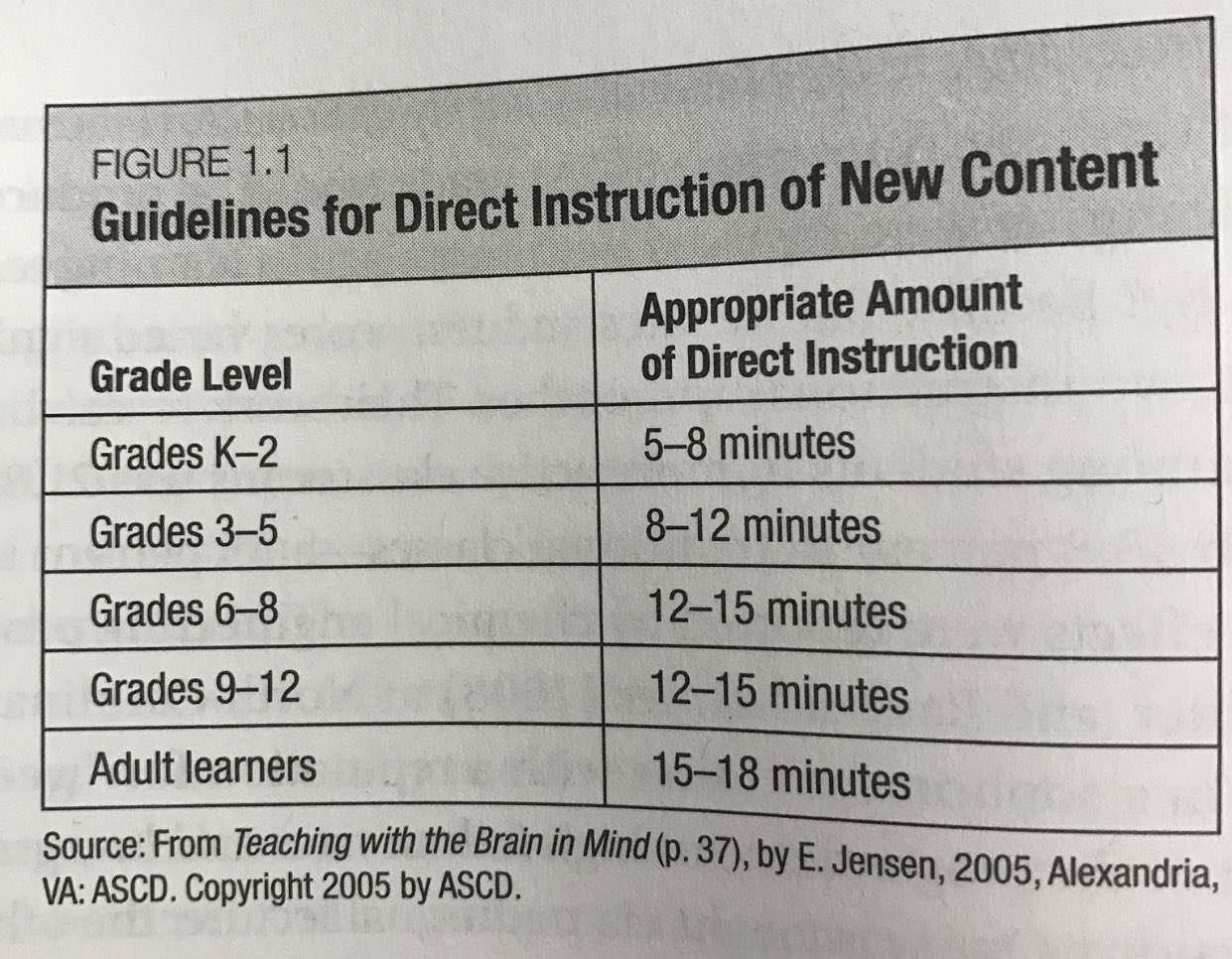
Direct instruction or lecturing have always played a significant role in classrooms, but is it really the best way to engage students in the content? No More Telling As Teaching does not demonize lecturing like the title may imply. It simply recognizes that lecturing may not be the most effective instructional technique. We are often drawn to lecturing, because it might be the quickest way to cover the myriad of standards that exist in each content area. By the way, I don't like to use the word "cover" when referring to teaching the content. I'm in favor of the less is more philosophy to develop deep understandings for learners. 

We need to consider who is doing the work in the classroom. I would argue that if the teacher is doing most of the work in a classroom, I would bet most of the learners are likely compliant or unengaged. Tovani and Moje ask us to consider these three things when we think about engagement: a learner must know how to behave in a way that is productive to learning, a learner should be connected to the topic emotionally, and a leaner should be intellectually stimulated. The "pedagogy of telling" may not be the best method to achieve behavioral, emotional, and cognitive engagement.

According to Tovani and Moje (2017) the best way to learn is through a mix of classroom experiences. 
"They should include projects driven by questions or problems, whole and small group discussions, participation in real-world activities that make use of targeted learning skills, the reading and writing of multiple texts, interactions with challenging problems, and yes, just-in-time lectures (the best are usually interactive)" (p.21).  
To me the most important statement in the above mentioned quote is the focus on applying concepts from the content in a real-world environment. I have seen deep levels of engagement when teachers embed opportunities for learners to engage in the world outside of our school. Learners are more engaged in the activity when they know their work will be viewed by those on the outside. Too many times students don't find value in their work, because it is often done in a silo and we fail to make connections to our community and the real-world.

Tovani and Moje provide some questions to ask ourselves when we plan for our learners.
  • How can I connect my content to the world outside of school?
  • Why should my students care about this? What real problem will they be attempting to solve?
  • What will they create? Is it something that exists in the real world? Which disciplines will they be relying on to solve this problem? 
  • Who will hear or see their work besides me? 
Content needs context. 

I ran across this on Twitter recently. I think these are some good guidelines for all of us from young children all the way to adult learners. 


Thursday, August 29, 2019

Rugby Public School District Learns


I recently shared a blog about changes to our professional learning practices at Rugby Public School District, we had our first professional learning day on August 28th. Teachers, support staff, and administrators spent the morning learning from Donalyn Miller and Valinda Kimmel. Miller has written several books on establishing a reading culture in schools. Kimmel is a literacy consultant that has been helping our school district with early literacy practices. The theme throughout the morning was developing a reading culture from preschool to grade 12.

Staff learned about the power of read alouds, book talks, and different ways to study vocabulary. We often think that reading a book aloud is only good for young children, but the research shows that this is a powerful practice regardless of age. The peak for read alouds often occurs around third or fourth grade. Book talks align with our focus on building classroom libraries and allowing more choice for students over what they read. A Book Talk is a method used to share a book with another person without giving away the whole story. Finally, teachers were able to gain some easy to implement vocabulary activities that can be used across grade levels and subject areas.

We will have three different book studies this year. Our first book discussion was on the book Fundamental Five. Teachers were mixed into different groups and they discussed the five instructional strategies found within the book. One of our teachers commented, “we enjoyed this book and thought it was a nice reminder of what we can be doing to make our lessons better. I also think that because this was a small group session and that we were mixed between schools, it was an awesome way to build community and trust with other colleagues. This was a good experience.”

In the afternoon, we held a debrief session with a focus on next steps to implement these strategies learned in the morning. Teachers then spent the remainder of the day in teams focusing on the following questions: What do we want students to know and be able to do? How do we know they know? What are we doing collectively to intervene when students don’t know? What are we doing collectively to enrich students that already know?

Our district appreciates the ability to provide our teachers additional time for learning and the time to implement our school initiatives. Yesterday was a great day of learning and collaboration! When we know better, we do better. 

Monday, July 29, 2019

RPSD to Increase Time for Teacher Training


At the February 12th school board meeting, the Rugby Public School Board voted to increase the amount of time for teacher training by adding seven additional days of training to the 2019-2020 school calendar. The school board took advantage of a recent law change that provides schools with additional flexibility for teacher training and storm day makeup.

The approved school calendar for 2019-2020 provides 10 days of professional development for teachers and support staff. This equates to one professional development day per month. The school district will not have students in session on these training days. In the past, we would front load most of our training during our two days of professional development prior to school starting. Due to the time constraints of the school day and a traditional school calendar it has been extremely difficult to gain momentum on our key school initiatives. According to research on adult learning, high quality professional learning is job embedded and continuously occurs throughout the year.

In general, the calendar change will provide teachers more opportunities to engage in school improvement, curriculum planning, and personal professional development during their working hours. It is the belief that quality is greater than quantity in relation to time in front of kids. All professionals need time and opportunities to update, to train, to interact with other professionals, to hone their craft, to reflect on their work, to get better. Effective professional development is distributed over time and not jammed into a single day.

Professionals need opportunities to: become aware of best practices, observe others modeling new or different practices, have opportunities to practice, receive feedback, reflect and interact with others. When teachers are able to meet regularly to reflect on practice, examine student work, agree on common outcomes, research best practice, observe others, share effective practices, everyone benefits. The traditional structure and length of the school day has not allowed for this type of practice. Sometimes the lumberjack must stop sawing to sharpen his blade to improve production. This is no different than the teaching profession, sometimes we need time away from teaching to improve teaching.

You can view the new calendar at this website: https://tinyurl.com/y25zzqkw


Thursday, April 18, 2019

Deep Learning

This post has been influenced by a recent book I have been reading, Deep Learning by Fullan, Quinn, and McEachen. Fullan et al., share their insight on deep learning. They define deep learning as, “valuable learning that sticks – it situates the learner as someone who acts upon the world (usually with others), thereby transforming her or himself and the world itself.” This is really about relevance, students need to find relevance in what they do in the classroom. We need to give them opportunities to apply what they learn in real world situations. We need to provide them opportunities to pursue their passion. Real world application and finding their passion will make their school experience more engaging and relevant.

“Put a young person in a stagnant situation or one demanding irrelevant activities, and they will appear unreachable” (Fullan et al., 2018, p. 9).

According to Jenkins (2013), student engagement levels peak during kindergarten at 95% and slowly decline to 39% by the time students reach grade 11. This is very concerning and something we should be considering within our school improvement efforts. How do we create classrooms that students want to attend every day for 175 days of school? I love when my own kids come home from school excited about what they learned at school and continue to explore the topic at home. All kids should experience this sense of excitement throughout their school experience.

Deep learning is the process of acquiring these six global competencies: character, citizenship, collaboration, communication, creativity, and critical thinking.

“In the past, we mostly asked students to solve problems that have already been solved. Today we have moved from asking our students to be consumers of knowledge to asking them to apply their solutions to real-world problems” (Fullan, Quinn, McEachen, 2018, p. 82).

Over the past few weeks, I have been able to witness a few examples of what I would consider deep learning.

Last week, our seniors presented their capstone projects as part of fulfilling the requirements of their senior English course. Seniors were able to pick a topic that they were passionate about and complete a mini-research study on the topic. They researched their topic, conducted surveys, analyzed the data, and provided a presentation on their topic to the public on April 11th. I included a few of the topics in the image below. I was thoroughly amazed by the knowledge they acquired and how they were able to apply it to a real-world situation.


Earlier this week, Mr. Leier and members of his Community Development class were invited to meet with Governor Burgum to discuss their work on the Mainstreet Initiative. These students participated in a community forum earlier this year and were asked to gather information on the following: What are the strengths and weaknesses of our community? If Rugby were to be able to build a Multi-Purpose Community Center, what would residents want to see and how might they support it? The culmination of this project involved a meeting with the Governor and his Main Street Initiative Team in Bismarck, ND.


 “Students have untapped potential, but given voice and choice through deep learning we see them influencing dramatic changes to organizations, society, and pedagogy” (Fullan, Quinn, and McEachen, 2018, p. 47).

The challenge with these types of learning experiences is that they take considerable time to complete, but I’ll bet what they learned about their topic will stick with them for years to come. We need more of these types of learning experiences in school. Let’s trust students to take on real world problems and apply their learning. We will be surprised about what they can accomplish.

Monday, March 11, 2019

Quality Over Quantity

I prepared this information in support of House Bill 1346. HB 1346 shifts our instructional day requirement to hours. This bill creates flexibility for school districts to do some pretty innovative things. I believe that the amount of instructional time may not be as important as the quality of the instructional time.

How does North Dakota’s instructional time requirements compare to other states? 

Currently, North Dakota Century Code requires 1,050 instructional hours for high school and 962.5 instructional hours for elementary school. NDCC also includes a 175 day requirement for all school districts. The chart below compares North Dakota to our neighboring states. Rugby Public School District requires a longer school day than the state requirement. It should be mentioned that many school districts in the state of North Dakota require more instructional time than the state requirement. 


How does North Dakota’s instructional time requirements compare to international educational systems? 

The country of Finland’s educational system has long been admired internationally. Finland continually scores near the top of international educational assessments in math, reading, and science. Finland requires approximately 600 instructional hours for elementary and high school. Finland outperforms the United States with half of the amount of instructional hours. The top 36 international educational systems in the world require 800 hours on average for elementary school and approximately 700 hours for high school. The United States’ average is approximately 1080 instructional hours for both elementary and high school (Sahlberg, 2010, p. 91). 

Why do international educational systems spend less time in front of students? 

In general, lower teaching hours provide teachers more opportunities to engage in school improvement, curriculum planning, and personal professional development during their working hours. It is the belief that quality is greater than quantity in relation to time in front of kids. All professionals need time and opportunities to update, to train, to interact with other professionals, to hone their craft, to reflect on their work, to get better. Effective professional development is distributed over time and not jammed into a single day. Professionals need opportunities to: become aware of best practices, observe others modeling new or different practices, have opportunities to practice, receive feedback, reflect and interact with others. When teachers are able to meet regularly to reflect on practice, examine student work, agree on common outcomes, research best practice, observe others, share effective practices, everyone benefits. The traditional structure and length of the school day has not allowed for this type of practice. Sometimes the lumberjack must stop sawing to sharpen his blade to improve production. This is no different than the teaching profession, sometimes we need time away from teaching to improve teaching. 

Leading the world in the time we spend in front of students is not the answer, redirecting a portion of that time for personal professional development is. The world’s educational systems spend less time in front of students and use that time to improve their practice. 

Our board recently approved our instructional day waiver for our 2019-2020 school calendar. This calendar will have 10 professional development days and 36 (50 minute) late starts for teacher collaboration. HB 1346 would allow districts the flexibility to make structural changes as needed and districts would no longer have to submit a waiver. 


Tuesday, February 26, 2019

RPS and HAMC partner to become a Reach Out And Read Site.

Rugby Public Schools has partnered with HAMC Johnson Clinic to become a “Reach Out and Read “site. Reach Out and Read is a national nonprofit organization that gives young children a foundation for success by incorporating books into pediatric care and encouraging families to read aloud together.

“We are excited to partner with HAMC by purchasing the books through our Striving Readers Grant” says Mike McNeff, Superintendent of Rugby Public Schools.

Through Reach Out and Read, practitioners at HAMC Johnson Clinic will “prescribe” reading aloud to infants and toddlers. At each well child/well baby check, HAMC practitioners will be giving a book to the child and talking about the importance of reading out loud.

HAMC Physician Assistant, Dustin Hager says “We know that childhood experiences early in life can have a lasting impact on later learning, behavior, and health. Many studies have shown a strong, association between a home reading environment, such as access to books, frequency of reading, and variety of books read, and brain development.”

Jodi Schaan, Medical Staff Coordinator for HAMC says, “We are excited to partner with Rugby Public Schools and the Reach Out and Read program, fostering a love of reading & learning in babies & preschoolers that will benefit them throughout their life.”

Reach Out and Read currently serves 4.7 million children and their families. The Reach Out and Read has 6,000 program sites in all 50 states. The Reach Out and Read model is endorsed by the American Academy of Pediatrics.

Wednesday, January 23, 2019

Striving Readers Grant is an Opportunity for the Whole Community

You may remember that Rugby Public Schools was awarded a North Dakota Striving Readers Grant this past fall. It is a federal grant aimed at improving literacy from birth to grade 12. This a wonderful opportunity for our schools, but also for our community! 

Not only do we have some exciting new things going on in K-12 due to this grant, but we are now able to provide literacy programming for children in our community who are in the birth to age five range. 

Karen Black and Gail Rham have been hired to assist us with the birth to age five literacy programming in our community.  Many of you will recognize these names as they were both teachers at Ely Elementary for many years.  They have extensive knowledge working with young students, and are very excited to start working with little ones in our community. 

The Heart of American Library and many of Rugby’s daycare providers have agreed to take part in this literacy programming.  Twice a month Karen and Gail will be doing Story Hour at the Heart of America Library.  This month’s topic will be “Rhyming, Sequencing, and Retelling.”  Story Hour is every Friday from 10:15-11:00AM. We hope to see more families attend this great opportunity!
Similar programming will be provided to our local childcare providers. Mrs. Black and Mrs. Rham will be working with the following childcare providers, Growing Place Daycare, The Kids Next Door, Mindy Stier, Connie Grove, Mandy Kuhnhenn, and Terry Lemar. 

RPS has partnered with the Heart of America Johnson Clinic and the First District Health Unit.  RPS will be providing books to both clinics.  The medical providers will provide books to babies and toddlers as they come in for their well-child visits, as well as continuing to talk about the importance of literacy at an early age. 

Reading, rhyming, singing, and talking — beginning from birth — profoundly influence literacy and language development, the foundations for all other learning! 

Wednesday, January 16, 2019

The Barrier of Time

I have been thinking about the structure of our school calendar for a long time. It is incredibly difficult to lead complex change within our current calendar. Staff development for educators often occurs during small chunks of time throughout the year (early outs and late starts). Due to our school calendar a considerable amount of time passes between each training. This makes it difficult to develop momentum and continuity from one training to the next. Quality staff development should be continuous and job-embedded. Due to our schedule and the busyness of the school day, learning something new is often placed on the back burner due to more pressing issues.

I did a small study of the large employers within our community. I wanted to see how the other large employers invest in staff development. The graph below compares the annual amount of hours for staff development for each employee classification.


Note: HAMC = Heart of America Medical Center, JD = John Deere, Bremer Bank, FIB = First International Bank, and RPSD = Rugby Public School District. 

Unfortunately, I wasn’t shocked from the data in the chart above. Our teachers receive significantly less staff development than other professional positions within our community. This is a problem and schools need to build more time for staff development into their schedule. We should be investing in our teachers and support staff like the hospital, banks, and area agricultural businesses. 

Here are our core initiatives: 

Professional Learning Communities 

Teachers are grouped by grade level and subject area and these meetings occur every Wednesday from 8:00 - 9:00 AM. Each group focuses on these four questions: 1) What do we want students to know and be able to do? 2) How will we know if they can do it? 3) What will we do for students who already can do what is expected? 4) What will we do to support and help students who have not achieved the standards?

Standards-Based and Competency-Based Learning

Students at Ely Elementary have been receiving what we call a standards-based report card throughout their school experience. This method of reporting progress is helpful to parents and educators to identify weak areas for the student. It allows teachers and support staff to apply appropriate interventions to improve these identified areas. 

Social and Emotional Wellness

A recent student survey indicated that our students are less happy and have been experiencing an increase in depression. The reported increase in depression is not a localized problem that is only impacting our community. State and national survey results suggest that this is a state and national problem for adolescents and adults. To be proactive, we have recently implemented a curriculum that focuses on social and emotional wellness. All students take part in social and emotional wellness activities on a weekly basis. 

Literacy Curriculum and Instruction

Our school district was awarded a $700,000 Striving Readers Grant to focus on literacy from birth to grade 12. We have purchased a new English and Language Arts curriculum for grades K-6. We have also purchased a new intervention curriculum for struggling readers as well. These new curricula will be implemented during the 2019-2020 school year. 

Each of the above mentioned core initiatives require an immense amount of time to carry out with fidelity. For us to continue to build a great school system, we need more time. We are in the midst of developing a calendar that will address the time issue. The proposed calendar will provide 60 hours of staff development time along with approximately 30 hours of late start time for teacher collaboration. We believe the new calendar for the 2019-2020 school year will help us manage our initiatives in a more efficient way. The 2019-2020 school calendar will be approved within the next few months. 


Monday, December 3, 2018

Ely Capacity Concerns

Ely Elementary has been experiencing positive enrollment growth over the past few years. Please take a few minutes to hear how growth has created space challenges at Ely Elementary.


Tuesday, November 13, 2018

Urgency and innovation

Our school district was invited to take part in an innovation academy led by Dr. Scott McLeod. Dr. McLeod has led several innovation academies across the country. Members from our school district will take part in seven days of training over the course of this school year. The goal is to explore innovative practices, examine current practices, and reimagine them. I came away with many questions and a sense of urgency. The challenge is how quickly are we able to lead this type of change within a school district? Like most districts, we do not have a lack of things to do. Our teachers are working extremely hard and are engaged in all types of change initiatives. The type of change described by Dr. McLeod requires us to redesign professional learning for teachers. Our current school schedule/structure is a barrier to adult learning. Teachers speed from class to class with one period dedicated to preparation. At the end of the day their plate is full and learning something new is often put on the back burner. Learning Forward provides schools with some recommendations in regard to the amount of time needed for professional learning.
Learning Forward has recommended that professional learning occur “several times per week among established teams of teachers, principals, and other instructional staff members where the teams of educators engage in a continuous cycle of improvement” (NSDC, 2009, p. 2).
Does your school have this amount of time set aside for adult learning? Unfortunately, in most schools adult learning takes a backseat due to the school schedule/structure. Along with adult learning, McLeod challenged us to think about student engagement levels, higher order thinking, and 21st century skills.

Engagement vs. compliance

Students are engaged when they are able to work on problems that are important to them and their community. Engaging classrooms are less teacher centered and more student centered. Are our students engaged or are they compliant? There is a definite difference. Do lessons include a real world impacts? Are they displayed or presented publicly? Are they engaged in the learning process? To what level are students involved in the decision making process?

Higher order thinking

Higher order thinking is extremely important to our student’s future success. They will need to be able to think for themselves. Deeper learning schools are moving away from low level thinking tasks like factual recall and procedural regurgitation. They are more focused on the 4 C’s (Creativity, Critical Thinking, Communication, and Collaboration) when designing instructional programming. We should all reflect deeply on this quote, what percentage of our students think this way?
When we teach in "mother robin" fashion — trying to mentally chew up everything for our students so we can put it into their intellectual beaks to swallow — students tend to become, if I can slightly mix my metaphor, "Polly parrot" learners: 
"I can't understand anything unless you tell me exactly how and what to say and think. I need you to figure out everything for me. I shouldn't have to do more than repeat what you or the textbook say." - Foundation for Critical Thinking
Content vs. Skills

Deeper learning schools are less focused on content and more focused on the skills needed to navigate complex content. According to McLeod, “innovative schools are moving from isolated, siloed academic work to environments that provide students more opportunities to engage with and contribute to relevant local, national, and international interdisciplinary communities.”

Relevancy

This really all comes down to relevance. How will we (public education) remain relevant? There are many choices for parents and students these days. These choices will only get better and more appealing for parents and students. How will we reimagine and redesign our educational systems to fit our students?

Find a few minutes to watch this video.


Check out What School Could Be by Ted Dintersmith.


Monday, October 15, 2018

Consequences don't motivate challenging students.

I have given my fair share of consequences to students as an educator over the past 14 years. Rarely, have these been effective at changing the behavior of our most challenging students. Most students with challenging behaviors have been challenging throughout their entire school experience, and yet we continue to impose consequences without teaching them the skills to not be challenging.

A consequence is a common method used to control student behavior. When a student does something that is undesirable, we often let them know through a consequence that the behavior was inappropriate. Consequences work for most kids in school, because most kids have the skills to do well. If our philosophy is, “kids do well if they want to,” then when a kid doesn’t do well, we believe he or she doesn’t want to. Adults often think this is a motivation issue for challenging kids and we need to make the kid want to do well. Consequences rarely motivate challenging students.

As you read this, you might be thinking if we don’t hold challenging students accountable, then how will we prepare them for the real world? I would argue that we aren’t preparing them for the real world if a consequence is our only method to teach them how to behave. We have to teach them the skills to handle different situations and manage their emotions in a productive way. This involves collaborative problem solving between the adult and student. It doesn’t involve imposing adult will, because this is usually ineffective when dealing with challenging students. Kids do well if they can. A kid will do well if he or she has the skills to do well. I am not suggesting that we get rid of consequences, because they have their place in schools. I am merely suggesting that we teach challenging students (a small percentage of the student population) the skills to do well. Using only consequences will not prepare them for their future. We need to identify when challenging behavior typically occurs, what skills are they missing, and teach them the skills that are needed to be successful.

Differentiation is a successful means of reaching a student’s academic needs, why not differentiate based on a student’s behavioral needs as well?

I recommend Lost at School by Ross Greene if you are interested in approaching behavior differently in your school and classroom.

Tuesday, October 2, 2018

You should read: The Book Whisperer


According to a recent poll by the Associated Press, the average adult read four books in a year. One quarter of those surveyed did not read a book at all. This is a concerning statistic to me. How can we promote literacy to our youth if we are not reading ourselves?

Why are adults not reading more?

Unfortunately, many of the causes may occur at a very early age. We set the stage for a lifelong reader as soon as they exit the womb. Reading to them as an infant through preschool is important to their literacy development. Children begin to develop early language and literacy skills long before they begin talking.

As children get older and enter our formalized school systems, how do we (educators, parents, and support staff) encourage or hinder the development of a lifelong reader? Donalyn Miller, a former classroom literacy teacher and author, recommends embracing reading as a lifelong pursuit and not just a collection of skills for school performance (2009). Take a minute and reflect on how often your child reads for enjoyment. Is their reading only associated with school tasks? This is something we as parents and educators need to reflect on. Reading shouldn’t only be something children do for school, a student’s motivation to read should go beyond school tasks.

We know that interest level is very important for all ages of readers. I think we have all picked up a book at some point in our life and struggled through it, or even quit reading it. Interest level is a touchy subject and challenging to implement. There are literary works that many educators would say are extremely important for all kids to read. The challenge is that not all kids are motivated to read the required text. If students are only reading the classics, then they may never have the opportunity to investigate their own reading interests, and therefore never develop into the reader they could have been.
“Reading has become schoolwork, not an activity in which students willingly engage outside of school” (Miller, 2009, p. 121). 
Miller (2009) recommends schools provide time for independent reading within the classroom and that we should allow students free choice over what they want to read. Whole-class novels take considerable instructional time and no one text can meet the needs of all readers. Fluent readers will speed through, while lower readers may struggle through the text. Each level of reader may end with different levels of comprehension based on their reading level. Some alternatives to whole-class novels are: reading the book aloud to students, or share-read, where students follow along and read silently with the teacher. Both of these methods allow the student to spend their mental effort on comprehending the text.

I think Miller has a valid argument and schools should consider a balance of time spent on reading associated with school tasks, and time spent on independent reading. At the end of the day, when their school experience has completed, we want students to develop into adult readers. Not an adult or child who only associates reading with tasks associated with school.

If you haven’t read The Book Whisperer by Donalyn Miller, I highly recommend it. There are many strategies embedded in the text that help teachers create a more literacy rich environment.


Monday, September 17, 2018

Parent Advisory Committee 2018

Parents,

I need your help!

Five years ago we started a Parent Advisory Committee (PAC). We have had several parents take part in these PAC meetings. We typically organize four meetings each school year and try to target dates that do not conflict with other activities. These meetings usually last around an hour.

These meetings have opened communication between our school district and parents.  The topics you can expect at these meetings are insight on current initiatives, feedback from you on our school programs, and a book discussion (you don’t have to read the book to participate).

Please go to the link below if you are interested in taking part in this opportunity.

Parent Advisory Membership Link: http://tinyurl.com/qhsf5vn

We are looking to schedule our first meeting date in November. If you are interested in taking part in a conversation to improve our schools please visit the link above by October 5, 2018.

Parents play a key role in their child’s success in school.  I am looking forward to hearing feedback from you and building better relationships within our school community.